
On a tract of 11 acres or more, the fences, gates, and water often matter as much as the house. They also come with legal duties that can surprise buyers who are new to rural property. Here is a practical overview of the law, the inspection, and the questions to ask before you close.
This is general information, not legal advice. If a fence or boundary question turns into a dispute, a real estate attorney is the right person to call.
Open range, closed range, and local stock laws
Texas is generally an open range state. Texas A&M AgriLife Extension's fence law handbook, Five Strands, explains that under the common law, livestock owners are not required to fence their animals in. Local stock laws and highway rules are the two big exceptions.
Chapter 143 of the Texas Agriculture Code lets the freeholders of a county, or of an area within a county, petition for a local option election. One subchapter covers horses, mules, donkeys, hogs, sheep, and goats, and another covers cattle. Where a stock law passes, owners may not permit the listed animals to run at large.
So is Ellis County closed range? A county-by-county stock law chart compiled by a private law firm, and listed by the Texas State Law Library, shows Ellis County adopting a stock law covering horses, mules, jacks, jennets, cattle, hogs, sheep, and goats in a July 26, 1930 election. Still, there is no official statewide list. Five Strands and the Texas Association of Counties both recommend asking the county clerk to search election records, or checking with the sheriff, county attorney, or county Extension agent.
Livestock on highways
State law treats land along U.S. and state highways as closed range everywhere. Section 143.102 says a person who owns or controls a horse, mule, donkey, cow, bull, steer, hog, sheep, or goat may not knowingly permit the animal to roam at large, unattended, on a highway right-of-way. Section 143.101 defines "highway" as a U.S. or state highway, not a numbered farm-to-market road, and Section 143.108 makes a violation a Class C misdemeanor, with each day a separate offense.
Five Strands notes that in a 2020 case, the Texas Supreme Court held that the "knowingly permit" standard applies on state and U.S. highways even in a county with a stock law. On farm-to-market and smaller roads in a stock law county, an owner may be liable if the owner permitted the cattle onto the road. Courts look closely at facts such as known weak fences and prior escapes. If a tract fronts a highway and you plan to run livestock, Five Strands says maintaining that fence is the landowner's responsibility.
Fence lines, boundary lines, and shared fences
A fence is not a survey. Our post on acreage due diligence covers why older fences often do not match the property line and why a current survey matters.
Shared fences raise their own questions. According to Five Strands, a Texas landowner has no legal obligation to share the cost of building or maintaining a neighbor's fence on the property line unless they have agreed to, and an agreement should be in writing, kept by each owner, and recorded in the county deed records. When a fence sits off the line, the handbook suggests a written boundary line agreement filed in the deed records. Under Sections 143.121 through 143.123, a jointly owned dividing fence generally may not be removed without mutual consent, and disconnecting attached fences requires six months' written notice.
Ask the seller whether any fence agreements exist, and ask the title company whether any are recorded.
Fence types and what to inspect
A Texas NRCS fence specification, shared by AgriLife Extension, describes common types: barbed wire and suspension fences on larger pastures, woven or net wire where tighter control is needed for sheep, goats, horses, or hogs, high tensile wire that is safer than barbed wire for horses and wildlife, board fences for horses and corrals, and electric fences that livestock must be trained to respect.
Walk as much of the line as you can and look for:
- Corner and end braces. The specification calls brace assemblies the basis of a fence's soundness and notes that if any brace fails, the wire loses tension.
- Gates. They should hang from a braced post, swing freely, and close securely.
- Water gaps where fences cross creeks or draws. The specification lists water gap replacement and removal of woody growth in the fence as routine maintenance, along with inspections after storms.
- Cattle guards. Check that they are intact and that any pit underneath is clear.
- Loose wire, leaning posts, and trees growing into the line.
For rough budgeting, a 2022 AgriLife fact sheet lists Texas NRCS estimates of $2.16 per foot for four-strand barbed-wire cross fence on normal soils and $3.05 per foot on steep or rocky soils. Prices vary, so get current bids.
Water and stocking
AgriLife Today reports that cattle drink about 1 gallon per 100 pounds of body weight in cold weather and nearly 2 gallons in the hottest weather, and that lactating cows need nearly twice as much as non-lactating cows.
AgriLife's stocking rate guide calls stocking rate the most important grazing decision, notes that cattle make limited use of areas more than 2 miles from water, and warns that stocking for average rainfall will overstock a ranch about half the time. If you hope to keep agricultural valuation through grazing, our post on how 1-d-1 valuation works in Ellis County explains the local intensity standards.
City limits, the ETJ, and deed restrictions
The State Law Library's backyard animals guide says that within city limits, city ordinances determine whether you can keep livestock. In a city's extraterritorial jurisdiction, Local Government Code Section 212.003 says a city generally may not regulate how property is used unless state law authorizes it. The county stock law still applies either way.
Private restrictions can be stricter. AgriLife's rural land purchasing checklist advises reviewing deed restrictions in the title work and confirming local ordinances and stock laws. If an owners' association governs the property, Property Code Section 202.004 presumes its exercise of discretionary authority over restrictive covenants is reasonable unless a court finds it arbitrary, capricious, or discriminatory. Read them before you make an offer.
If you are looking at acreage and want help sorting out fences, water, and restrictions on a specific tract, our team is glad to walk the property and the paperwork with you.
Sources
- Texas A&M AgriLife Extension, Five Strands: A Landowner's Guide to Fence Law in Texas, second edition (PDF).
- Texas Agriculture Code, Chapter 143, Fences; Range Restrictions.
- Matthiesen, Wickert & Lehrer, S.C., Texas Stock Laws by County (PDF).
- Texas State Law Library, Animal Law: Livestock.
- Texas Association of Counties, Stock Laws (PDF).
- Nolen Rogers Realty Team, Before You Close on Acreage in Ellis County.
- USDA Natural Resources Conservation Service, Texas, Fence (Code 382) General Specification, hosted by Texas A&M AgriLife Extension, Leon County (PDF).
- Texas A&M AgriLife Extension, Reducing Bacteria with Best Management Practices for Livestock: Fence (PDF).
- AgriLife Today, How to prevent heat stress in cattle (June 25, 2026).
- Texas A&M AgriLife Extension, Stocking Rate: The Key Grazing Management Decision (PDF).
- Nolen Rogers Realty Team, How Agricultural (1-d-1) Valuation Works in Ellis County.
- Texas State Law Library, Animal Law: Backyard Animals.
- Texas Local Government Code, Chapter 212, Section 212.003.
- Texas A&M AgriLife Extension, Texas Rural Land Purchasing Checklist.
- Texas Property Code, Chapter 202, Section 202.004.
Nolen Rogers Realty Team, OnDemand Realty.
FROM OUR BLOG

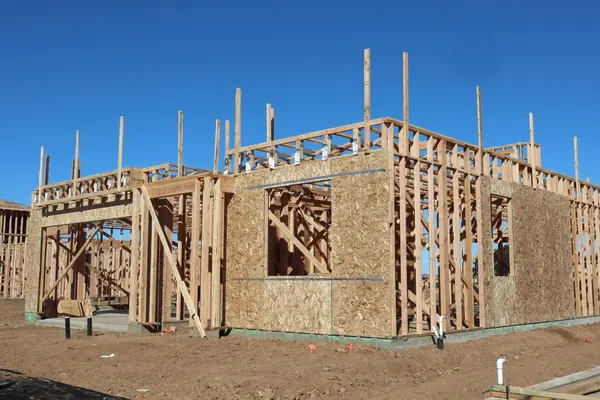
Researching Lennar in Ellis County? What to Know Before You Visit a Model Home
If you are researching Lennar, the most useful thing to know before you walk into a model home is that the sales team works for the builder, not for you. Lennar says so plainly: its consultants represent Lennar and not customers. Buying new construction can be a good fit, but the contract, the incen
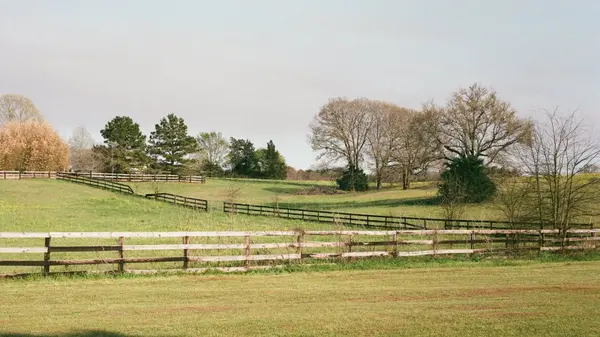
Financing Land and Acreage in Texas: How It Differs From a Regular Home Loan
Buying acreage in Ellis County or the surrounding counties often involves a different kind of loan than buying a house in a subdivision. Here is a practical overview of how land financing works in Texas, so you can start the conversation with lenders on solid footing. Loan programs, rates, and requi
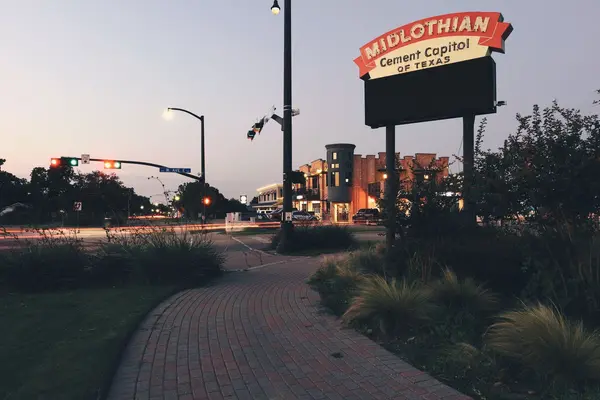
Considering Midlothian, TX? A Practical Guide to Roads, Utilities, Taxes, and Growth
Midlothian sits in northwest Ellis County. The city's budget document describes it as about 25 miles southwest of Dallas on US 67 and 10 miles northwest of Waxahachie on US 287. If you are weighing a home there, here is a practical look at the roads, utilities, parks, growth, and property taxes, plu