
A question our team hears more and more is whether a home can help pay for itself, usually through a guest house, a short-term rental, or a bed and breakfast.
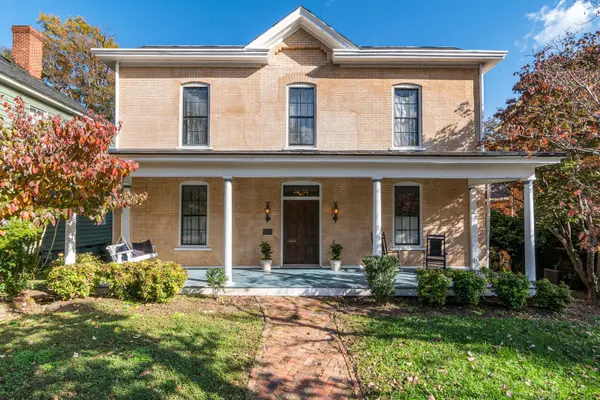
It can be a real benefit, with rules that are easy to underestimate. Our listing at 1025 W Main Street is a good example to walk through: a 1902 Victorian with a separate two-bedroom guest home and a pool barn, and the listing itself tells buyers to verify city approval and permitting for any short-term rental, event, or bed and breakfast use. We wrote about the business case for this property earlier. This post is about the rules behind it.
Why income potential matters
A second living space gives you options. Rental income can help offset a mortgage, taxes, and upkeep. If plans change, the same space can serve as a long-term rental, guest quarters, a home office, or a separate living area for a relative. That flexibility is often worth more than the income itself. What we will not do is promise a dollar figure. Income depends on permits, management, demand, and expenses, and none of that is guaranteed.
Short-term rentals in Waxahachie
The City of Waxahachie defines a short-term rental as renting all or part of a residence for less than 30 consecutive days. Under Ordinance 3414, adopted October 16, 2023, an STR needs a Specific Use Permit approved by City Council in every zoning district except the Central Area district, plus annual registration with the Planning Department. According to the city's registration page and STR FAQ, the SUP application fee is $500, the registration fee is $300 a year, an annual inspection is required, and the SUP requires a public hearing.
A few parts of the ordinance matter a great deal to a buyer:
- The SUP is not transferable. A new owner has to apply for a new one, and a prior permit "has no bearing" on whether the new one is approved.
- Occupancy is capped at two adults per bedroom plus two, with a maximum of 10 people. Off-street parking is limited to one space per bedroom and no more than five.
- Owners must carry at least $1 million per occurrence in insurance, provide security cameras on the primary entrances, and post a local emergency contact.
- Parties and events are prohibited, and the property cannot be rented to more than one group at a time. The ordinance also prohibits advertising a portion of the premises.
That last point is not one to guess at. If you want to live in a main house and rent a separate guest house on the same lot, ask the Planning Department in writing how the ordinance applies before you count on it.
According to the city's GIS map, 1025 W Main is zoned SF-1, which is not the Central Area district, so a short-term rental there would need an SUP. You can check any address on the city's STR zones map.
Bed and breakfast is a separate use
A bed and breakfast is defined differently. Under the zoning ordinance, it must be occupied as a permanent residence by an owner or renter, serve or offer breakfast, and have five or fewer guest rooms in the house or an on-site accessory dwelling. It also requires an SUP from City Council, a certificate of occupancy, annual fire marshal inspections, and compliance with the life safety code. Guest stays are limited to 14 consecutive days in any 30-day period. In residential districts, events for non-guests require a temporary permit, up to six a year. There is local precedent: in 2016, City Council approved an SUP for a bed and breakfast at 717 W. Main in SF-1 zoning. The publicly available copy of the zoning ordinance we found is the 2018 version, so confirm the current text with the city.
Hotel occupancy tax
Both STRs and bed and breakfasts owe hotel occupancy tax. The Texas Comptroller sets the state rate at 6 percent and specifically includes houses and bed and breakfasts. Waxahachie adds a 7 percent local tax on gross rents, including cleaning and booking fees, unless a platform has already remitted it. Stays of 30 consecutive days or more are generally exempt from the state tax. A tax professional can help with reporting and income tax questions.
The historic district question
1025 W Main sits within the West End Historic District, listed in the National Register in 1986. The city's historic preservation page explains that a National Register district does not impose local land use controls the way the city's two historic overlay districts (Downtown and Oldham Avenue) do. However, the city's Certificate of Appropriateness page lists properties in a historic district or on the National Register among those needing a certificate for alteration, restoration, or new construction. Because those pages read differently, we would call the city's preservation staff before planning exterior changes. Ordinance 3414 also prohibits adding bedrooms to a property for STR use.
Lenders, appraisals, insurance, and restrictions
Lenders are careful with projected rental income. Under Fannie Mae's Selling Guide, short-term rental income can be used only for one-unit investment properties that are legally permitted, cannot come from an accessory dwelling unit, and on a purchase is generally counted at 50 percent of long-term market rent or validated short-term rental data. Other loan programs differ, so talk to your lender early. Do not assume an appraisal will give credit for income a buyer hopes to earn. Appraisers value the real estate, not the business.
Insurance deserves the same attention. The Texas Department of Insurance warns that most homeowners policies will not cover damage to a rental property, or may limit what they pay. Finally, ask the title company for any recorded deed restrictions, and if there is an HOA, read its rules on rentals before you write an offer.
Before you buy
Income potential is a good reason to look closely at a property, not a reason to skip the homework. Confirm zoning and permits with the City of Waxahachie Planning Department, talk with a lender and a tax professional, and get insurance quotes before you finalize your budget. If you want to walk through 1025 W Main or talk about another property with a guest house or rental potential, our team would be glad to help you sort out the questions.
Sources
- City of Waxahachie, Short-Term Rentals (STR).
- City of Waxahachie, Ordinance No. 3414, Short-Term Rentals (adopted October 16, 2023).
- City of Waxahachie, STR Registration.
- City of Waxahachie, Short-Term Rentals: Frequently Asked Questions.
- City of Waxahachie, Hotel Occupancy Tax.
- City of Waxahachie, Main Interactive Map (zoning and historic district layers) and Short Term Rental Zones map, accessed November 16, 2026.
- City of Waxahachie, Zoning Ordinance, as amended May 21, 2018 (Ordinance No. 3020), definitions and bed and breakfast facility standards.
- City of Waxahachie, City Council minutes, February 1, 2016 (Ordinance No. 2843).
- City of Waxahachie, Historic Preservation and Certificate of Appropriateness.
- Texas Historical Commission, Atlas: West End Historic District.
- Texas Comptroller of Public Accounts, Hotel Occupancy Tax.
- Texas Tax Code, Chapter 156, Hotel Occupancy Tax (§ 156.052 rate; § 156.101 permanent resident exception).
- Fannie Mae Selling Guide, B3-3.8-03, Rental Income from the Subject Property: Short-Term Rental (September 2, 2026).
- Texas Department of Insurance, Renting out your home? Check your insurance.
Nolen Rogers Realty Team, OnDemand Realty.
FROM OUR BLOG
Getting Ready to Sell in Ellis County: Disclosures, Surveys, Inspections, and the Option Period
Much of the stress in a home sale shows up after the contract is signed: the inspection report, the repair request, a survey question from the title company. Gathering the right paperwork before listing eases a lot of it. Here is what Texas sellers are typically asked to provide, and what happens du

Buying in a Newer Ellis County Subdivision: MUDs, PIDs, and HOA Dues Explained
Two homes at similar prices in newer Ellis County subdivisions can carry very different monthly costs. The difference often comes from three things that are easy to overlook while touring: a municipal utility district (MUD), a public improvement district (PID), and a homeowners association (HOA). He

Your First Property Tax Year in Ellis County: Homestead Exemptions, Appraisal Notices, and Protests
The first year in a new home comes with a property tax calendar that is easy to miss. Exemptions have deadlines, the appraisal notice arrives in spring, and the first bill may not look like the ones that follow. This is general information, not tax or legal advice. Rules change, so confirm details w